
The Impact of 140W+ PD 3.1 Fast Charging on Laptop Batteries: A Comprehensive Sourcing Guide for B2B Distributors
Introduction: The Fast-Charging Revolution and the Hidden Cost
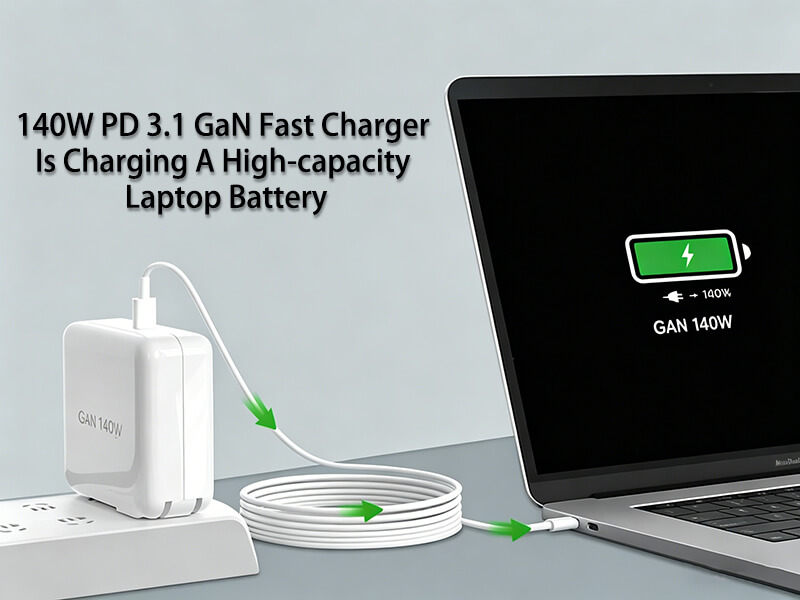
The landscape of portable computing has fundamentally shifted. Gone are the days of carrying bulky brick adapters and waiting overnight for a laptop to charge. With the widespread adoption of Gallium Nitride (GaN) technology and the USB Power Delivery (PD) 3.1 protocol, 140W—and even up to 240W—fast charging has become the new standard for premium laptops.
For consumers, hitting a 50% charge in just 30 minutes is a massive convenience. However, for B2B distributors, repair shops, and e-commerce retailers, this rapid technological leap introduces a critical challenge: accelerated battery degradation. When consumers replace their degraded laptop batteries, they expect the aftermarket replacement to handle their high-wattage GaN chargers just as safely as the original. If a replacement battery lacks the proper thermal management and internal circuitry, a 140W charge can lead to catastrophic failure, severe battery swelling, and a surge in RMA (Return Merchandise Authorization) rates.
Drawing on over 13 years of specialized experience in laptop battery manufacturing, this guide breaks down the science of high-wattage charging degradation and outlines exactly what distributors must look for when sourcing PD 3.1 compatible replacement batteries.
Understanding the Technology: PD 3.1, GaN, and the 140W Threshold
To understand why batteries degrade, we must first understand the power delivery mechanism.
The USB PD 3.1 specification introduced the Extended Power Range (EPR), pushing the maximum power output from the previous 100W limit up to a staggering 240W. The 140W tier (28V at 5A) is currently the most prevalent among high-end workstation laptops.
It is crucial to distinguish between the adapter technology and the charging protocol. GaN (Gallium Nitride) refers to the semiconductor material inside the charger itself, allowing 140W adapters to be incredibly compact and efficient. PD 3.1 is the software protocol that dictates how the charger and the laptop “talk” to each other.
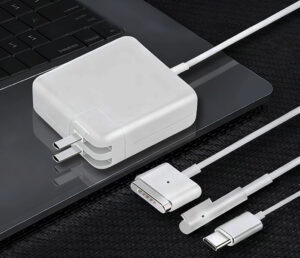
Furthermore, how this power is delivered physically matters. For example, in the Apple ecosystem, achieving 140W charging often utilizes Apple’s proprietary MagSafe 3 connector rather than a standard USB-C cable. While standard USB-C ports on these machines support fast charging, the MagSafe 3 interface is specifically engineered to handle the 140W input with minimal resistance and heat generation at the port level.
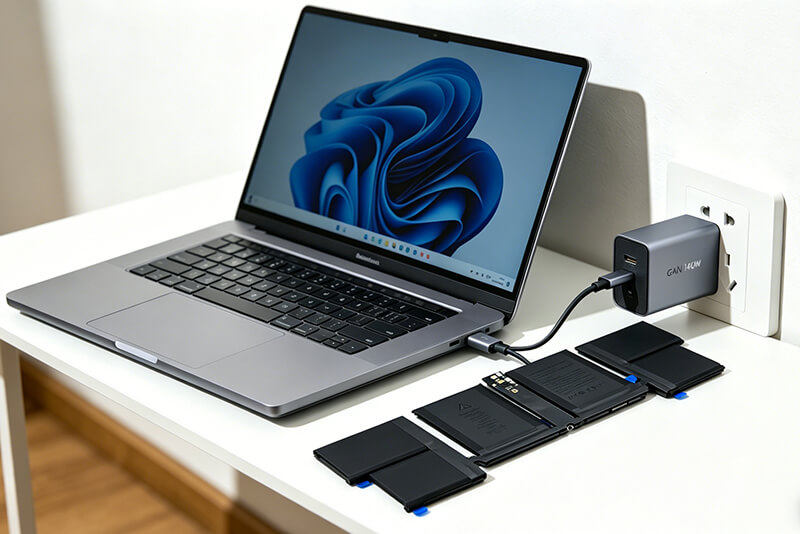
When a 140W current hits the laptop, the internal Battery Management System (BMS) must perfectly orchestrate the flow of that energy into the lithium-ion cells.
The Science of Degradation: How High Wattage Attacks Lithium Cells
Why does fast charging kill cheap batteries? The degradation occurs primarily through three physical and chemical mechanisms:
-
Excessive Thermal Stress (Joule Heating):
The most significant enemy of a lithium-ion cell is heat. When pushing 140W into a battery, the internal resistance of the cells generates substantial heat. If a replacement battery uses lower-grade cells with high internal resistance, the temperature can quickly exceed the safe operating threshold (typically above 45°C or 113°F during charging). Prolonged exposure to high heat permanently damages the cathode structure and degrades the electrolyte, leading to a permanent drop in capacity.
-
Lithium Plating at High C-Rates:
The “C-rate” measures how fast a battery is charged or discharged relative to its maximum capacity. Fast charging forces lithium ions to move rapidly from the cathode to the anode. If the charging rate exceeds the speed at which the graphite anode can absorb these ions—especially if the battery is cold or poorly manufactured—the lithium ions pile up on the surface of the anode and turn into metallic lithium. This process, known as lithium plating, not only permanently reduces the battery’s capacity but can also create dendrites (microscopic spikes) that pierce the separator, leading to short circuits and fire hazards.
-
Battery Swelling (The “Spicy Pillow” Effect):
When the electrolyte inside the battery degrades due to the excessive heat of a 140W charge, it produces gas (primarily carbon dioxide and carbon monoxide). Premium batteries utilize high-quality electrolytes and precise manufacturing environments to minimize off-gassing. Subpar aftermarket batteries lack these controls, leading to rapid gas accumulation, severe swelling, trackpad damage, and significant safety risks.
Case Study: The MacBook Pro 16-inch (A2485) and the A2527 Battery
To illustrate the demands of modern fast charging, let’s examine a flagship device. The 2021 MacBook Pro 16-inch (machine model A2485) is a powerhouse that supports 140W fast charging via its MagSafe 3 port.
To safely absorb this massive power input, it requires a highly specialized power source: the A2527 battery.
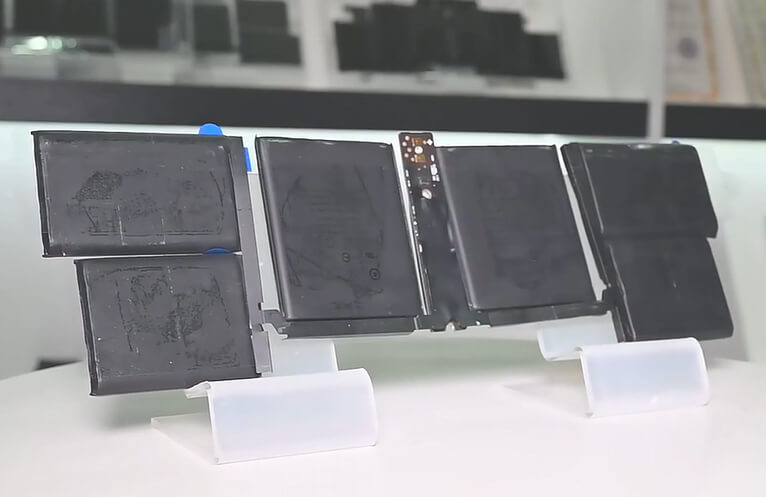
When B2B distributors source aftermarket A2527 batteries, the stakes are incredibly high. The original A2527 is a multi-cell powerhouse designed to communicate seamlessly with Apple’s power controllers. If an aftermarket A2527 is manufactured with standard, off-the-shelf control chips, the laptop may not recognize the battery’s thermal limits. The 140W GaN charger will push power faster than the cheap cells can handle, resulting in a battery that swells or dies within three months.
Precision in matching the correct battery model to the specific laptop model—and ensuring it supports the original fast-charging parameters—is non-negotiable for minimizing warranty returns.
Sourcing Strategy: What B2B Buyers Must Demand from Manufacturers
For distributors, system integrators, and large-scale repair chains, sourcing the cheapest battery is a recipe for disaster in the PD 3.1 era. To protect your brand reputation and bottom line, you must vet suppliers based on their ability to manufacture batteries that can survive 140W environments.
Here is the checklist you should use when evaluating a laptop battery manufacturer:
-
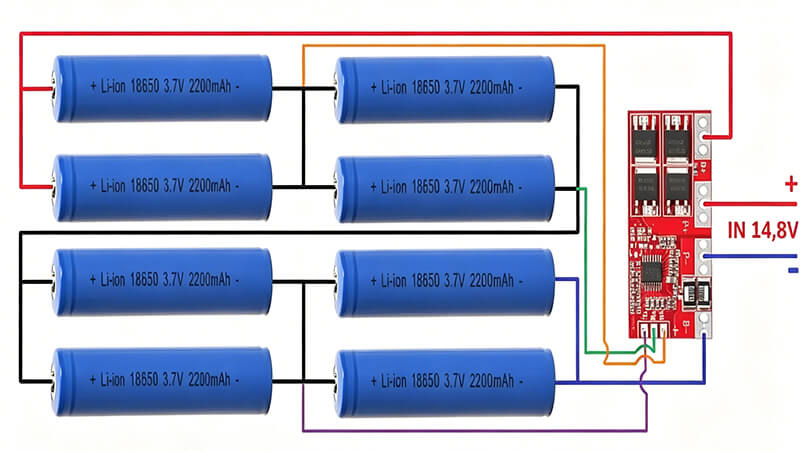
Advanced Battery Management System (BMS) with Tier-1 ICs:
The BMS is the brain of the battery. It communicates with the laptop to dictate charging speeds. As the battery fills up or gets warm, the BMS must tell the 140W GaN charger to throttle down the power. Demand batteries built with premium Integrated Circuits (ICs), such as those from Texas Instruments (TI). These chips ensure accurate real-time monitoring of voltage, current, and temperature, matching the OEM safety protocols.
-
Strict Use of Grade A, High-Density Cells:
Not all lithium-ion cells are created equal. Grade A cells are the top tier of production, featuring the lowest internal resistance, highest energy density, and strict voltage matching. In high-wattage charging scenarios, low internal resistance is vital for keeping temperatures down. Ask your supplier for their cell grading process and ensure they do not use recycled or Grade B cells.
-
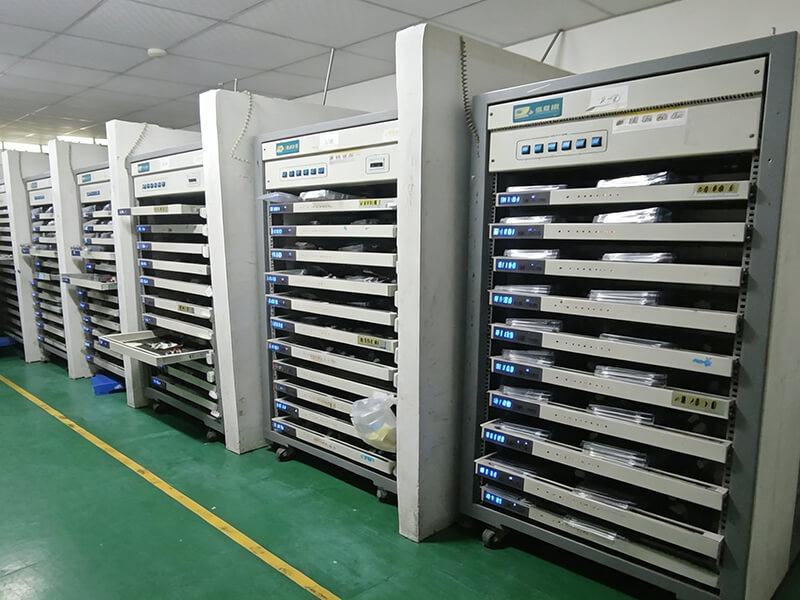
Stringent Factory Aging and QA Testing:
A battery might look fine off the assembly line, but how does it perform under stress? Reputable manufacturers subject their batteries to rigorous “aging” processes. This involves charging and discharging the batteries under various loads to ensure stability before they are ever shipped. Ensure your supplier performs comprehensive testing, including high-temperature cycle testing and overcharge/over-discharge protection validation.
-
Complete Regulatory and Safety Compliance:
Shipping lithium-ion batteries globally is heavily regulated. Your supplier must provide up-to-date certifications, including UN38.3 (essential for air and sea transport), MSDS, CE, FCC, and RoHS. A factory that maintains these certifications demonstrates a commitment to international safety standards.
-
Long-Term Manufacturing Stability:
The laptop parts industry is fraught with fly-by-night assemblers. Partnering with a factory that has a long, proven track record—such as a decade or more of continuous operation—ensures stability in your supply chain. Experienced manufacturers have refined their injection molding, cell welding, and PCB assembly processes over millions of units, resulting in a structurally superior product that won’t fail under the physical stress of thermal expansion.
Conclusion: Future-Proofing Your Inventory
The transition to 140W+ PD 3.1 and GaN charging is not a passing trend; it is the new baseline for mobile computing. As laptops become more powerful, the batteries inside them undergo unprecedented stress.
For B2B buyers, the strategy is clear: shift the focus from the lowest unit cost to the lowest total cost of ownership. A battery that costs two dollars less but results in a 10% RMA rate, negative reviews, and angry corporate clients is a terrible investment.
By partnering with a seasoned manufacturer that prioritizes Grade A cells, advanced TI control chips, and rigorous thermal testing, you can confidently supply your network with premium aftermarket batteries. You will provide your customers with the rapid charging convenience they demand, without sacrificing the safety and longevity they deserve.
Are you experiencing high defect rates with your current battery supplier?
At HTJ International Co., Limited, we leverage over 13 years of manufacturing expertise to engineer high-performance laptop replacement batteries and standard PD power adapters that seamlessly integrate with the latest fast-charging protocols.
Our stringent QA processes and commitment to Grade A materials ensure your inventory performs flawlessly. [Contact our technical sales team today] for a comprehensive compatibility matrix and wholesale pricing on our premium battery lines.